

The Kwame Nkrumah University of Science and Technology, Kumasi (KNUST) has launched the KNUST Injury Prevention and Research Centre at its College of Health Sciences, in a move aimed at strengthening injury research, policy engagement and prevention efforts in Ghana.
The initiative is supported by a training grant from the Fogarty International Center of the U.S. National Institutes of Health under the project titled “Strengthening Injury Control Research in Ghana and West Africa.”
Established in 2006, the project has built partnerships with a wide range of stakeholders and trained about 43 graduates at the MPH, MPhil and PhD levels, who have conducted studies on injury-related topics and are presenting their findings at the conference.
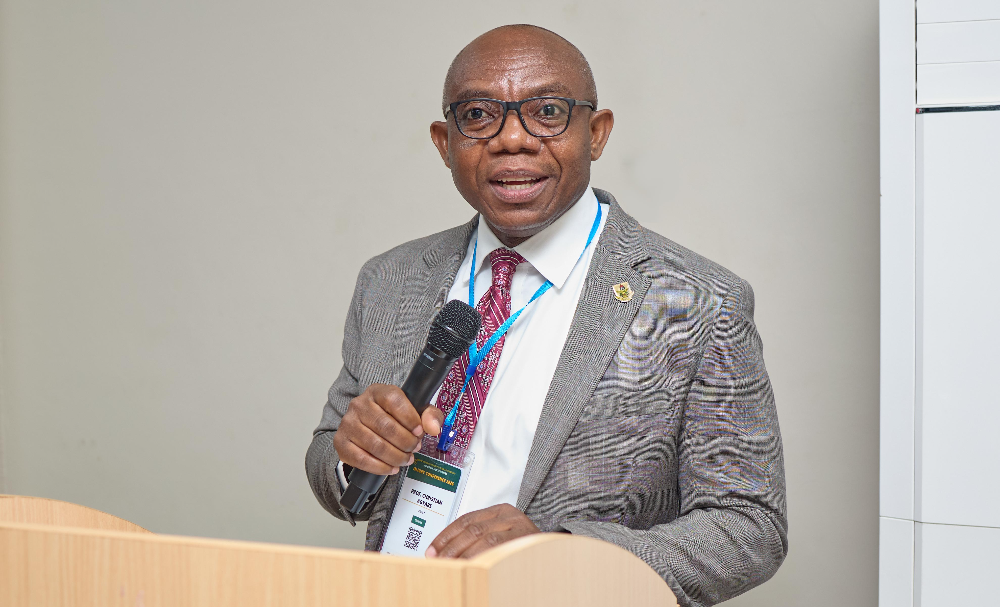
Professor Christian Agyare, Provost of the College of Health Sciences and representative of the Vice-Chancellor, said the centre were made possible through the KNUST Fogarty Injury Research Project.
Prof. Agyare said the project has gone beyond training research leaders to create a platform for dialogue and collaboration, adding that the new centre would enhance knowledge sharing and support coordinated responses to injury prevention.
“Injuries are not freak events; they are predictable and preventable,” he said, calling for locally generated evidence to inform national policy and translate into action.
The launch which coincided with a two-day conference held from May 5 to 6, 2026, brings together researchers, policymakers and practitioners to explore practical responses to Ghana’s injury burden under the theme: “Nipping Ghana’s Injury Menace in the Bud – Harnessing Evidence from Local Research.”

Professor Adam Gyedu, Local Organising Committee chair from the Department of Surgery at the School of Medical Sciences, welcomed participants to the inaugural injury conference hosted by the centre in collaboration with the University of Washington and other partners.
He said the centre is a spin-off of the Trauma Project, which has trained more than 40 scholars and produced over 100 peer-reviewed publications on injury control priorities in Ghana. Despite this, he noted that the burden of injury remains high, making the conference timely for collaboration and identifying new research directions.

Professor Peter Donkor, consultant in oral and maxillofacial surgery at KNUST and Komfo Anokye Teaching Hospital, called for multidisciplinary collaboration, urging engineers, clinicians, emergency responders and safety agencies to work together on practical and sustainable solutions.

Professor Charles Mock of the Harborview Injury Prevention and Research Center commended the quality of research presented, saying it aligns with global standards and contributes to understanding and managing injuries in Ghana and beyond.
Delivering the keynote address, Dr George Kwadwo Owusu, Chief Executive Officer of the National Ambulance Service, underscored the role of data in shaping targeted interventions. He cited research published in BMC Public Health tracking transport-related injuries between 2019 and 2023 and providing district-level data for decision-making.
“These are not abstract academic exercises; they are life-saving intelligence,” he said, urging researchers to move beyond publication to influence policy and operational planning.
Dr Owusu highlighted Ghana’s progress in emergency care since the service’s establishment in 2004, noting its expansion from two dispatch centres, seven ambulance stations and nine ambulances to 16 regional dispatch centres, 297 stations, 356 ambulances and more than 3,400 emergency medical technicians providing 24-hour nationwide coverage.
Despite these gains, he said a gap remains between evidence and implementation. “The gap between evidence and action is where people die,” he said.
He called on researchers to engage policymakers with practical evidence on cost, feasibility and return on investment, and to use media platforms to amplify impact. He also pledged stronger collaboration with institutions including KNUST to enhance injury surveillance and integrate research into operations.
Additional discussions at the conference focused on mass casualty response, trauma care systems, injury surveillance and the persistent “no-bed syndrome”, with participants urged to translate dialogue into concrete action.
Stakeholders emphasised the role of government in prioritising injury prevention. With the World Health Organization targeting a 50% reduction in road traffic deaths and injuries by 2030, Ghana risks falling short without sustained investment in infrastructure, enforcement, public education, emergency care and research.
| Story: Emmanuel Offei | Photos: Faustina Eduah |


